
Liquid fertilizer tanks

Our liquid fertilizer storage facilities

CITERNEO flexible tanks offer a reliable, long-lasting solution for the storage of non-sulfur liquid nitrogen fertilizers. Manufactured in France using EXOM+ 140e technical fabric, they guarantee watertightness, resistance to aggressive products and durability, while reinforced polypropylene valves ensure optimum resistance to use.

The closed architecture protects the fertilizer from weathering and intrusions, guaranteeing optimal product conservation and environmental preservation. With volumes ranging from 1 to 400 m³, these tanks can be adapted to the needs of farming operations, and bespoke membranes can be added for retention basins on embankments or low walls, offering a complete, secure solution.
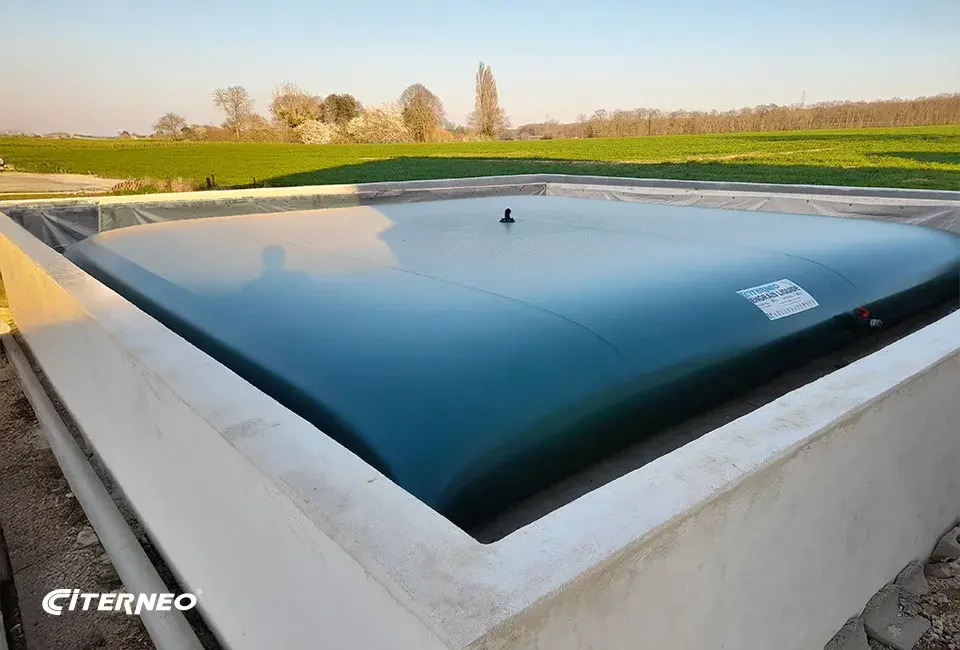
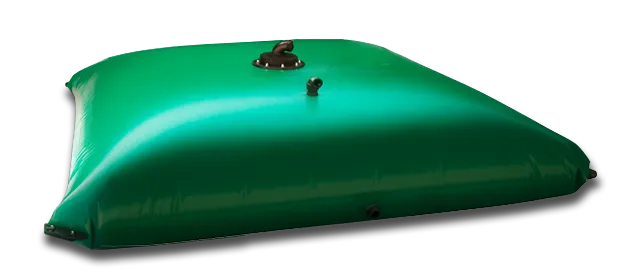
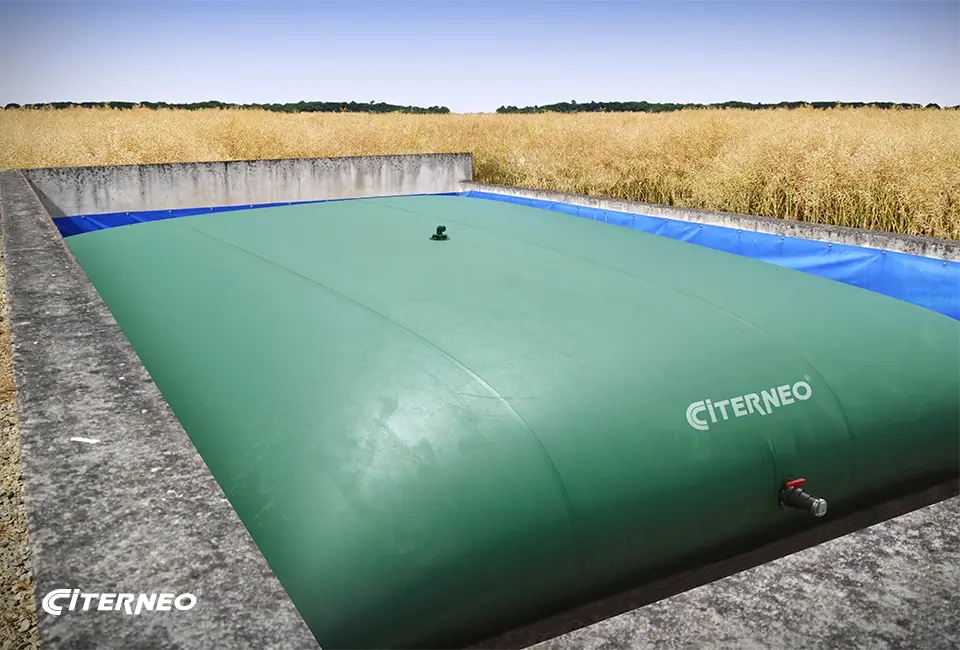
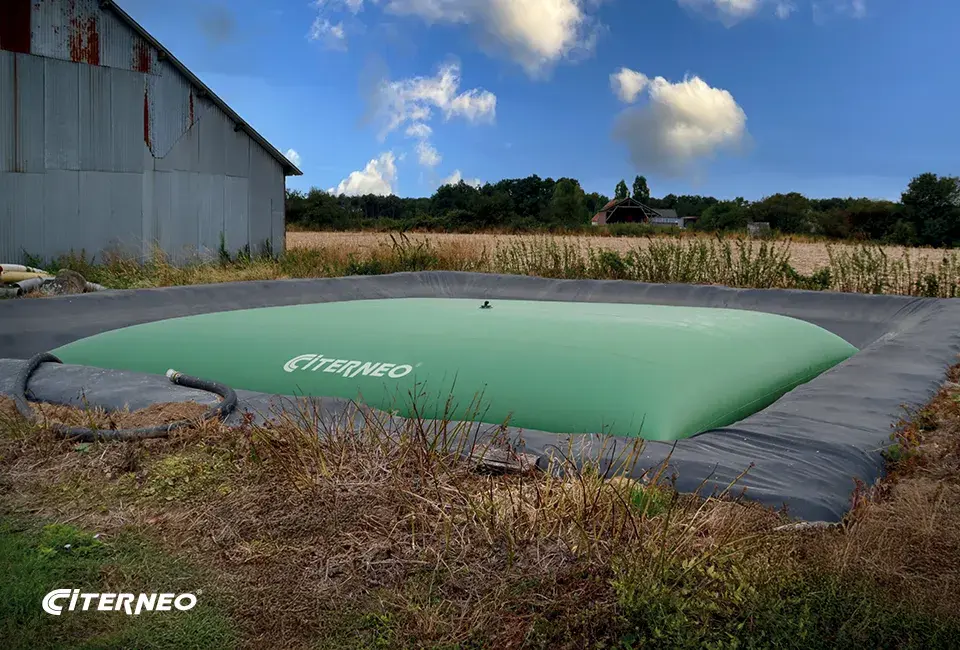
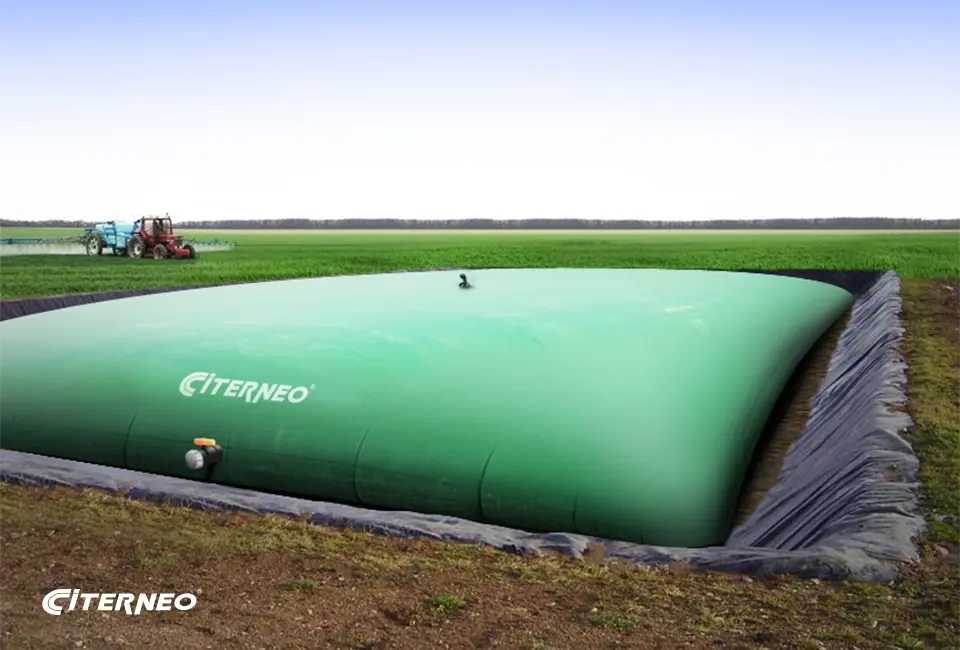
A flexible CITERNEO tank on a wall for storing liquid fertilizer.

Our liquid fertilizer tanks

Click on the flexible tank that suits your needs to access the configuration wizard. Other volumes are also available.

Select the tank
Flexible tank
Liquid fertilizer 25 m³
Public price
1100.72 € VAT not incl.
Select the tank
Flexible tank
Liquid fertilizer 30 m³
Public price
1260.56 € VAT not incl.
Select the tank
Flexible tank
Liquid fertilizer 40 m³
Public price
1473.63 € VAT not incl.

EXOM+ thermal and chemical resistance

Often called nitrogen pocket or flexible fertilizer pocket, our tank uses materials specifically designed for agricultural chemistry. The high-performance EXOM+ 140e membrane and reinforced polypropylene valves grant remarkable, long-lasting corrosion resistance. This expertise in complex liquids, which we also apply to the effluent tank, ensures structural stability in the face of extreme temperature variations (from -30°C to +70°C). When you choose a liquid fertilizer bag CITERNEO, you're investing in robust equipment that secures your inputs while protecting the environment against the risks of accidental soil pollution.


CITERNEO flexible tank for effluent storage

Retention basins and environmental safety

In accordance with current regulations, liquid fertilizer storage requires strict safety features. CITERNEO offers a complete solution including custom-made retention membranes. These membranes are designed for lining retention basins on embankments or low walls, guaranteeing total containment in the event of an incident. Opting for our poche souple made in France means ensuring liquid fertilizer storage in full compliance with environmental standards, while benefiting from a much more competitive cost per cubic meter than a steel or concrete installation.

An economical solution for optimizing your nitrogen purchases

The financial aspect is a major lever in farm management: the liquid fertilizer flexible tank offers a double advantage here. On the one hand, its competitive price and installation without heavy civil engineering make it far more affordable than a rigid liquid fertilizer storage tank. On the other hand, having such storage capacity allows you to achieve significant economies of scale by buying your fertilizer at low market price (off-season period) for later use. Investing in a large-volume CITERNEO nitrogen bag means ensuring profitable storage autonomy, quickly amortized by controlling your input costs.


Réglementation et obligations du stockage d'engrais liquide

The storage of liquid mineral fertilizers is subject to a strict framework designed to prevent accidental pollution of soil and groundwater. Using a CITERNEO flexible tank provides a hermetic solution without evaporation, meeting environmental safety requirements.

  • ICPE Regime (Heading 2175): Liquid fertilizer storage is regulated based on the stored volume. The Declaration regime applies from 100m3 and the Authorization regime above 500m3.

  • Mandatory Secondary Containment: All liquid fertilizer storage must be associated with a retention capacity. It must be able to hold 100% of the volume of the largest tank or 50% of the total capacity of the associated tanks. CITERNEO offers custom membranes to equip these retention basins.

  • Implantation Distances: To ensure the safety of third parties and the environment, the structure must generally respect minimum distances of 50 meters from dwellings, 35 meters from watercourses, wells, and boreholes, and 5 meters from public communication routes.

  • Corrosion Protection: Equipment (valves, fittings) must be compatible with the corrosive nature of fertilizers (stainless steel or high-density polymers are recommended).

Important Note: This information represents general regulatory guidelines and is not exhaustive. Regulations may evolve and vary according to local prefectural decrees. It is the operator's responsibility to contact the DDT/DDPP or DREAL to verify the specific local provisions applicable to their installation.