
Every drop counts. Climate change is disrupting water cycles, modifying river flows, intensifying periods of drought, but also amplifying floods.
These extreme phenomena put pressure on water resources and raise complicated challenges to manage. In France, only 0.6% of wastewater is currently recycled, a figure well below that of our neighboring countries. Yet, with water consumption constantly on the rise, particularly in the agricultural and industrial sectors, wastewater recycling and reclamation are emerging as necessary solutions for preserving this resource.
An ambitious plan to triple wastewater reuse in France.
The French government recently took steps to triple wastewater reuse by 2025. This ambitious target is part of a wider plan to reduce water consumption by 10% in 5 years and 25% in 15 years.
In this context, wastewater reclamation is not limited to its recycling for non-potable uses such as irrigation or urban cleaning. It also encompasses their transformation into valuable, and useful, resources, such as biochar (a carbonaceous material derived from biomass) or nutrients for agriculture.
This approach could not only ease the pressure on freshwater reserves, but also meet the environmental and economic challenges associated with these climate upheavals.
Potential still under-exploited
In France, only 0.6% of treated wastewater is reused, whereas in Spain and Italy, this rate reaches 10% and 14% respectively.
This figure illustrates how far behind our country is in this strategic field. Yet the opportunities are numerous: agricultural irrigation, urban cleaning, groundwater recharge or even industrial uses. These so-called "unconventional" waters represent a precious resource for reducing pressure on natural resources.
The low adoption of this practice can be explained by multiple brakes:
High infrastructure costs
Regulatory complexity, lack of standardization and clear guidelines
Risks associated with contaminants
Logistical challenges
Cultural resistance and public perception
Unawareness of the benefits
However, the government's Water Plan aims to reverse this trend with the ambitious goal of reusing 10% of wastewater by 2030, or 300 million m³ per year.
Innovations for recycling
Technological advances play a key role in wastewater recovery. For example, Montpellier-based greentech Aquatech Innovation has developed solutions such as "AquaPool", which regenerates pool rinsing water for re-injection into pools. Source
Similarly, the MEREN REUT project on Reunion Island illustrates how treated wastewater can meet agricultural needs in a context of extreme drought. Source
In Cabourg (Calvados), treated wastewater is used to clean urban sewage pipes. Source
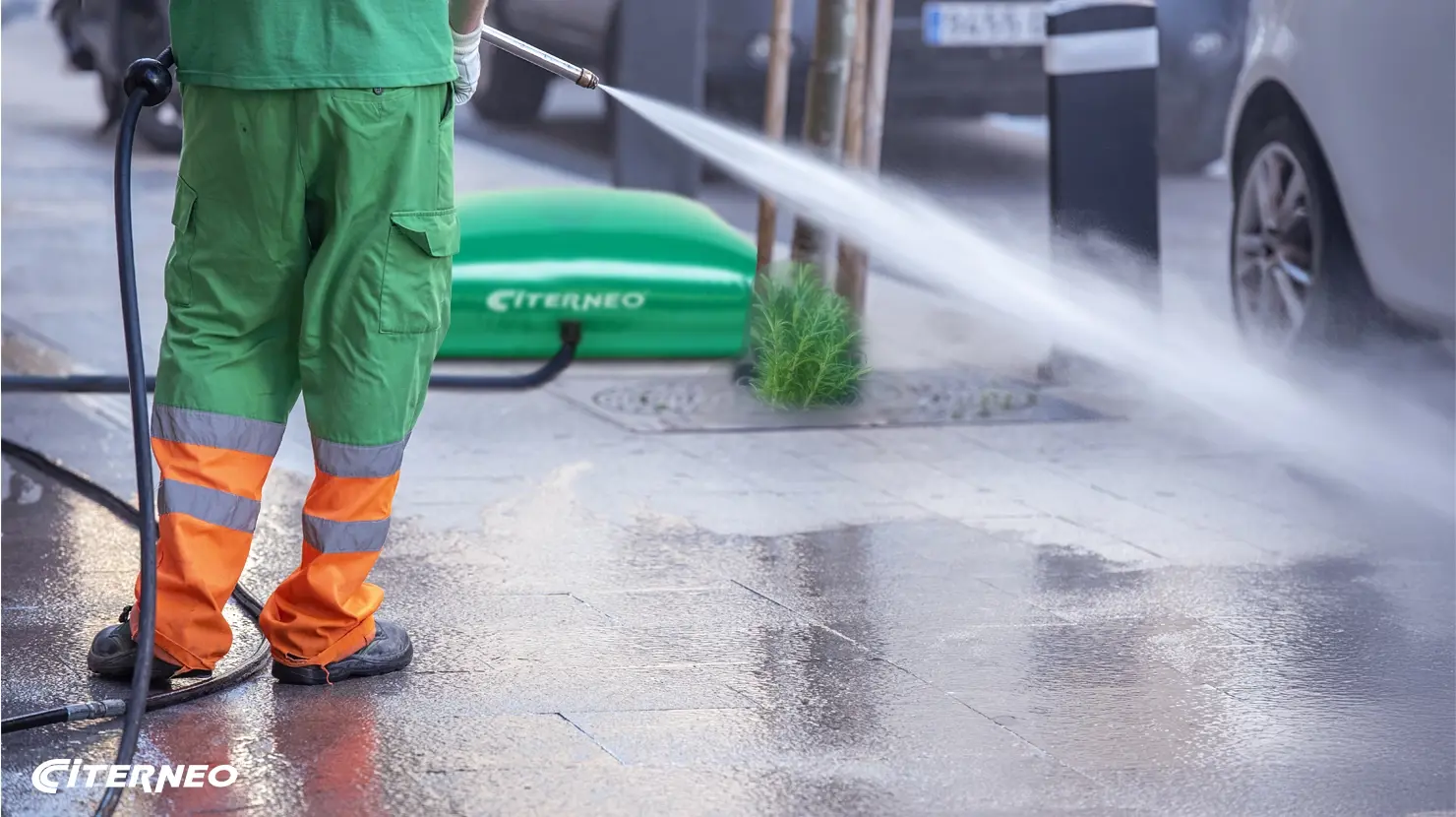
The town of Bergerac (Dordogne) uses treated wastewater to power the brush trucks that clean the streets. This water, previously reserved for agricultural irrigation or watering green spaces, undergoes additional filtration and double disinfection using ultraviolet light and chlorination.
These innovations are not limited to hardware equipment. Intelligent software can now monitor and optimize the entire water cycle, making these systems more efficient and accessible.
An evolving regulatory framework
Regulations are evolving to encourage the reuse of these unconventional waters. In January 2025, a new European directive introduced strict standards for the treatment of micropollutants: Directive (EU) 2024/3019, a revision of the Urban Wastewater Treatment Directive.
In France, several recent decrees facilitate urban and agricultural uses of treated wastewater. In particular, decree no. 2025-239 of March 14, 2025 has simplified the technical conditions for their use in ICPEs (Installations Classées pour la Protection de l'Environnement).

Environmental and economic benefits
Graywater reuse is fully in line with a circular economy approach. Not only does it reduce freshwater consumption, it also limits effluent discharge into natural environments. In Montpellier, for example, wastewater treatment plants treat the equivalent of 171 soccer stadiums of recyclable water (around 33 million m³) every year.
This resource could be used to water green spaces or clean roads.
Economically speaking, these practices enable local authorities and businesses to make substantial savings. The initial investment may be high, but it is quickly offset by reduced costs for water supply and waste treatment.
Challenges when water is retreated
Despite its many advantages, the reuse of polluted water still faces several challenges. Public perception is a major obstacle: many still associate these practices with health risks or inferior quality.
Better communication on the strict standards framing these uses could help overcome these reticences.
Furthermore, financing remains a decisive issue. The infrastructures to be built require major investments. Public-private partnerships or targeted subsidies could accelerate their deployment.
The financial weight of wastewater treatment infrastructures
The infrastructures required to treat and reuse grey water represent a considerable investment. In France in 2021, wastewater management cost around €14 billion a year.
Technologies such as microfiltration or reverse osmosis are expensive: between €110,000 and €250,000 depending on the process. Added to this are operating costs (energy and chemicals accounting for 30% of the total).
These costs hamper large-scale deployment, particularly in small communities or industrial companies.
Optimizing recycled water management with flexible tanks
In this context, the flexible tank appears to be a practical and innovative solution for temporarily storing treated wastewater prior to reuse.
Easy to install and modular, they enable large volumes of recycled water to be stored for irrigation, urban cleaning or supplying fire-fighting systems.
In metropolises, the integration of flexible cisterns could facilitate the management of production peaks, optimize distribution and secure reserves in the event of punctual need. This flexible, cost-effective solution is suitable for both local authorities and businesses.
Conclusion
Faced with climate challenges and ever-increasing demand for water, encouraging the recycling and reclamation of wastewater is no longer an option but a necessity.
Technological innovations and regulatory developments offer the tools needed to turn this ambition into reality.
By combining political, economic and social efforts, it is possible to imagine a future where every drop of water is used with care and efficiency.
France still has a long way to go, but the transition is well and truly underway.