
Faced with climatic challenges, farmers are looking for innovative solutions to guarantee the sustainability of their farms and ensure food security.
In 2023, France experienced one of its worst droughts in 50 years, affecting almost 70% of farmland. Surface water reserves fell by 30% compared with the annual average, putting many farms at risk.
Flexible cisterns, often overlooked, are proving to be valuable allies in this context. These tanks offer unique advantages, notably by improving water management and increasing farm resilience to climatic variations.
Flexible tanks, the right response to climate variations
Changing climatic conditions pose many challenges for farmers.
Farmers facing droughts and floods
Prolonged droughts, erratic rainfall and extreme weather phenomena are making water management more complex. Between 2000 and 2020, France recorded a 20% increase in drought episodes, particularly affecting the southern regions and Occitanie.
In 2022, more than 40 départements were placed in a water crisis situation, requiring restrictive measures on water use.
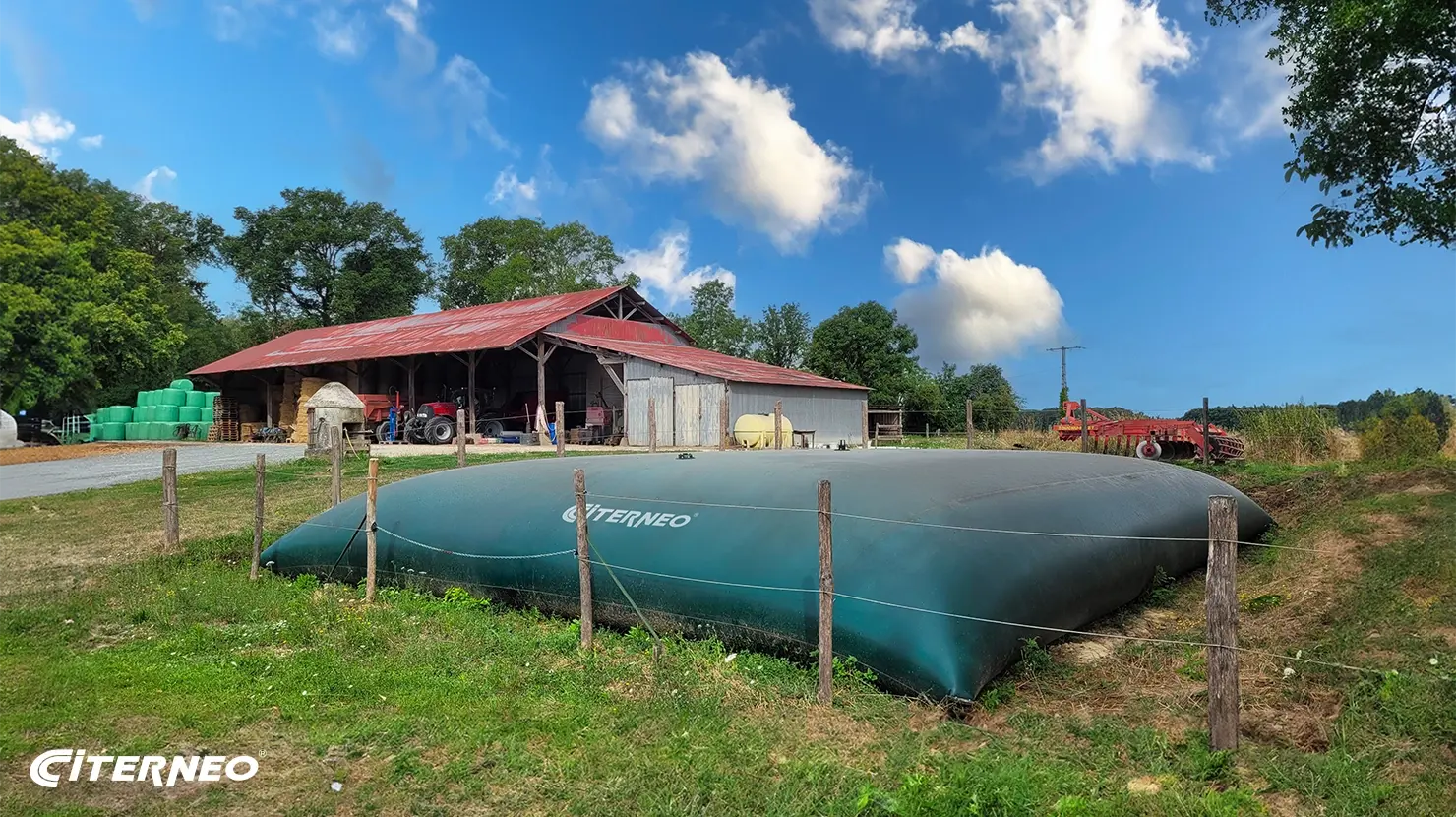
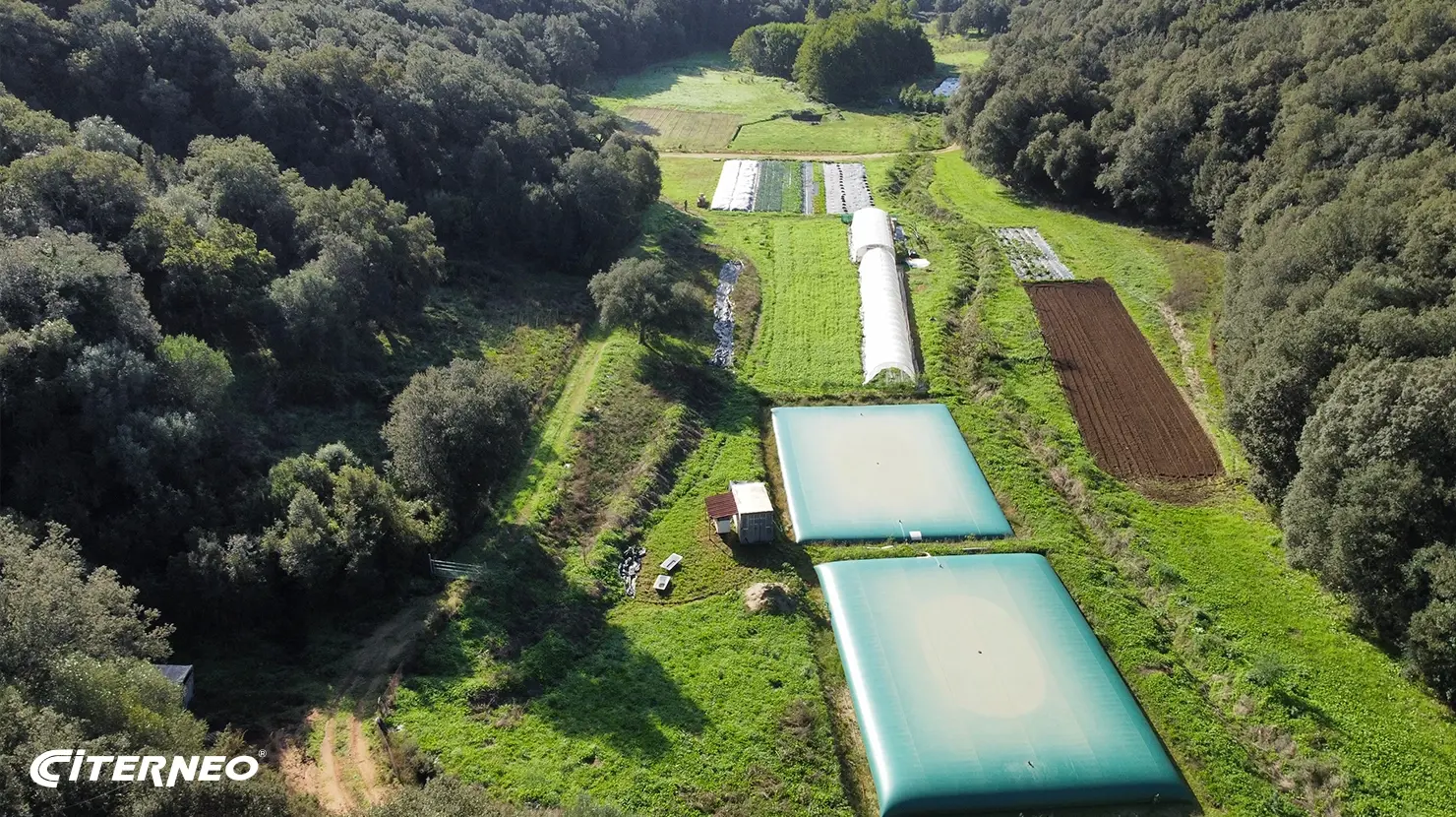
Soft cisterns, thanks to their flexibility and adaptability, enable rainwater or irrigation water to be stored efficiently. Unlike rigid tanks, they can be installed quickly and moved as required, adapting to the specific needs of each operation.
These self-supporting flexible tarpaulins can hold up to 2,500 m³ of water, offering a very substantial storage capacity.
Examples of farmers facing the climate challenge
In Provence, a region particularly affected by summer droughts, many winegrowers use flexible cisterns to ensure the irrigation of their vineyards. In Isère, for example, 2 tanks of 30 m3 each are installed on a truffle farm. These two flexible cisterns are designed to store water and recover rainwater, to irrigate truffle trees.
In Occitanie, farmers are increasingly adopting flexible cisterns to store rainwater to combat aridity.
According to a report by the Adour-Garonne Water Agency, the use of flexible cisterns has increased the resilience of local farms by 30% . The storage capacity of these self-supporting tanks offers farmers an effective solution for managing periods of water shortage.
In addition, the use of flexible tanks also contributes to reducing energy costs. For example, farms using these tanks can avoid excessive pumping of groundwater, resulting in lower energy consumption for irrigation. More rational water management limits expenditure on water purchases and treatment.
Food security and farm autonomy: the key to agricultural resilience
Food security in France largely depends on farmers' ability to produce enough food, even in the face of unpredictable weather conditions. Flexible cisterns offer a solution to guarantee this production.
By storing the water needed for irrigation, they enable farms to maintain a stable level of production.
A farmer in the Doubs region and producer of AOC Comté milk has also adopted flexible tarpaulins to cope with water challenges.
In Brittany, the association Eau et Rivières de Bretagne is implementing initiatives to support farmers in sustainable water management.
Their commitment to more environmentally-friendly agriculture is well documented, notably through actions to reduce nitrates in water.
Economic impact and benefits for farmers
The adoption of flexible cisterns brings significant economic benefits to farmers. By optimizing water management, these flexible tanks reduce production costs and improve the financial resilience of farms. In times of drought, often synonymous with significant financial losses, flexible tanks offer an effective solution for managing water resources.
For example, in the Camargue region of France, farms using flexible tanks have seen their revenues increase by an average of 15%.
Thanks to more efficient water management, these farms were able to irrigate their rice paddies and market garden crops, even during periods of low rainfall, considerably reducing yield losses.
Furthermore, these cisterns offer great flexibility of use. They can be moved and reused according to farm needs, which is particularly advantageous for crops requiring rotation or livestock requiring temporary watering points.
Organic farmers and the search for sustainable solutions
Organic farmers, committed to an environmentally-friendly approach, are constantly on the lookout for sustainable solutions to improve the resilience of their farms. Flexible cisterns represent an ideal solution for these farmers, enabling optimal management of water resources and reducing environmental impact.
A significant contribution to sustainable agriculture
In Burgundy, organic winegrowers who have installed this type of tank have noted an improvement in the productivity of their vineyards. By storing rainwater, they were able to ensure regular irrigation, reducing their dependence on irregular rainfall. This practice not only maintained the quality of the wine produced, but also led to substantial savings on water purchase and pumping costs. Without resorting to conventional irrigation methods that could compromise soil and crop quality.
In Provence, the Montaigu organic farm has installed several flexible tanks to optimize the irrigation of its market garden crops. Thanks to these tanks, the farm has been able to reduce its water consumption by 30%, while increasing its production of organic vegetables. The flexible storage capacity of the flexible tanks allows the farm to easily adapt its irrigation system to seasonal needs, ensuring sustainable management of water resources.
In southwest France, the Bio Sud-Ouest organic cooperative has also adopted the use of flexible tanks for its members. These tanks enable rainwater collected from the roofs of farm buildings to be stored and used for crop irrigation. The cooperative's tanks can hold up to 100 m³ of water each, offering an effective solution for managing periods of drought and guaranteeing the continuity of organic production.
Flexible pockets for agriculture with many advantages
By reducing dependence on groundwater sources, they help preserve water tables and minimize the environmental impact of farming activities.
Furthermore, these flexible tanks are made from sustainable and recyclable materials, making them an environmentally-friendly solution.
For example, Citerneo, a company specializing in the manufacture of flexible tanks, offers models designed to last more than 20 years, with enhanced UV and weather resistance, guaranteeing optimal longevity of installations.
Finally, organic farmers appreciate the ease of installation and flexibility of self-supporting flexible tarpaulins. They can be deployed quickly without the need for planning permission, and their modularity means they can be moved or reconfigured to suit specific crop requirements. This adaptability is particularly important for organic farms, which often have to adjust to climatic variations and changing market requirements.
Future prospects and sustainable technological innovations in agriculture
Flexible tanks, which already play a crucial role in sustainable agriculture in
France, continue to benefit from significant innovations. These technological advances improve not only their efficiency but also their sustainability.
Innovations are not limited to technical aspects. They also include corporate social responsibility (CSR) initiatives.
The leader in this field, Citerneo, has in fact developed cisterns capable of storing water volumes of up to 2,500 m³.
These cisterns are manufactured using advanced materials such as EXOM+ composite fabric, which reduces the use of PVC by 30%, thereby reducing the carbon footprint and increasing durability. This technology also makes it possible to create UV- and weather-resistant tanks, ensuring a longevity of over 20 years.
Citerneo, in addition to its commitment to French manufacturing, has been awarded the "Origine France Garantie" label. This label testifies to its commitment to supporting the local economy and reducing the ecological footprint of its products.
Conclusion
Flexible tanks represent an innovative and effective solution to the challenges of modern agriculture in France.
By enabling optimal water management, they contribute directly to the sustainability of farms and food security.
In the face of increasingly unpredictable weather conditions, these flexible tanks offer farmers a precious resource to ensure the continuity of their production.