
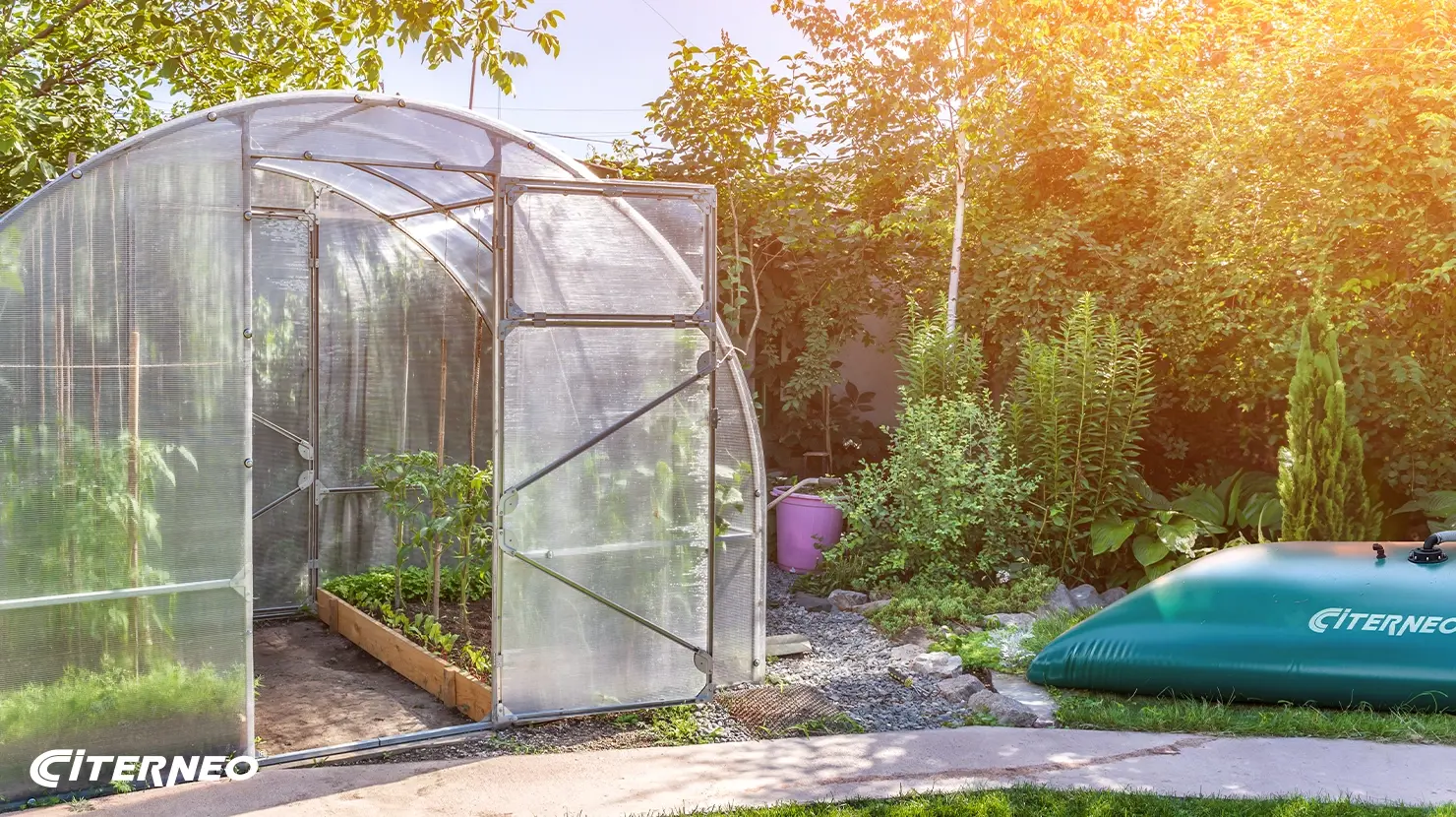
Let's reduce our consumption of withdrawn water with flexible tanks!
In France, water management is a major issue. Every year, 27.3 billion m³ of water are abstracted, including 5.3 billion m³ for drinking water, 3.2 billion m³ for agriculture, 2.5 billion m³ for industrial uses and 15.3 billion m³ for cooling thermal power plants. Given these volumes, the adoption of solutions such as flexible tanks could play a crucial role in preserving our water resources.
1. Agriculture: a solution to reduce irrigation
Agriculture consumes 3.2 billion m³ of water every year, mainly for irrigation, especially in times of drought. By recovering rainwater via flexible tanks, farmers could cover up to 50% of their irrigation needs. This represents a potential saving of 1.6 billion m³ of water per year, thus preserving drinking water resources (including groundwater).
2. Domestic uses: every gesture counts
Drinking water accounts for 5.3 billion m³ withdrawn each year, a large proportion of which is used for domestic needs such as watering, flushing the toilet, washing clothes, etc. By using a flexible tank to collect rainwater for these non-food uses, we could reduce domestic drinking water consumption by 20%, representing a saving of 1.06 billion m³ of water per year.
Homes using rainwater harvesting systems reduce their water bills by 20-50%, depending on their uses. Source ADEME
3. Green spaces and municipal swimming pools: preserving drinking water
Green spaces and local authorities use large quantities of water, often from drinking water. By recovering rainwater and water from municipal swimming pools, which are often drained, we could save up to 30% of the water used in these sectors, representing a saving of 0.9 billion m³ of water per year.
Several towns have already set up water recovery systems for the upkeep of their green spaces, and are saving up to 40% of their water consumption for these uses thanks to flexible tanks.
4. Industry and power plant cooling: water differently
Industry and power plant cooling account for a significant proportion of water withdrawals: 2.5 billion m³ for industry and 15.3 billion m³ for power plants. If flexible tanks could be used for some of these non-potable water needs, this would reduce withdrawals.
Total potential savings:
By combining agriculture, households, green spaces, industry and thermal power plant cooling, the use of flexible tanks could collect up to 5.6 billion m³ of water each year, or around 23% of our current water withdrawals in France.
A huge potential to be tapped
Today, flexible tanks still represent a small part of this potential, but the adoption of these solutions is growing rapidly. As a leader in this field, Citerneo has already equipped a number of farms, local authorities and industrial companies with effective solutions for recovering rainwater and reusing it.
But there's still a long way to go to achieve this on a large scale. By working together, we can multiply the impact of these solutions and preserve our most precious resource: water.
Citerneo, a key player in the ecological transition
Citerneo, the market leader in flexible tanks, is positioning itself as a key player in this ecological transition, with accessible and innovative solutions for all sectors.
Creative applications for even greater water savings
Beyond conventional uses, flexible tanks can be used for innovative projects in public spaces, industrial areas or rural applications. Every year, we discover creative new uses, such as water storage for snow cannons. Innovation continues to expand the possibilities for water savings, wherever water is precious.
Together, let's take action to preserve our natural resources and ensure a sustainable future!