
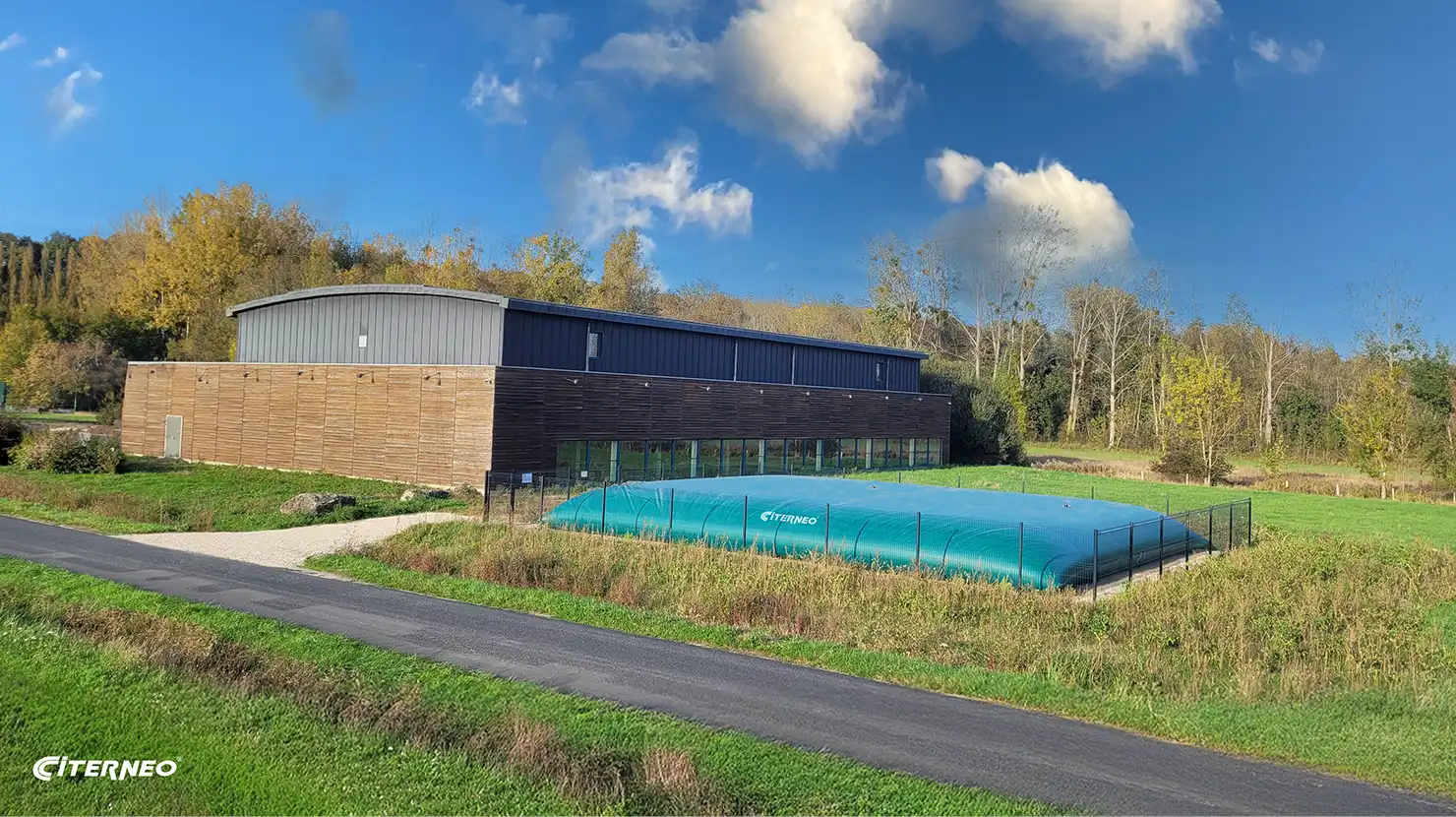
Flexible tanker and water management: the example of a responsible commune
Water management is a strategic issue for local authorities, particularly in the face of increasing drought episodes and the resulting restrictions on usage. In Pocé-sur-Cissé, the town council is facing increasing difficulties in maintaining its green spaces. It is also faced with restrictions on access to drinking water and river abstraction. This situation led elected officials to consider a more sustainable and autonomous solution: the installation of a rainwater harvesting tank.
Beyond a simple technical solution, this project is the result of in-depth reflection on the management of local resources and the optimization of existing infrastructures. Here's a look back at the key stages of this initiative, from awareness to the commissioning of this flexible tank.
A worrying observation: dependence on conventional resources
For many years, watering the commune's green spaces relied on two main sources: drinking water and drawing from the Ramberge river. This approach posed several difficulties. On the one hand, drinking water represents a significant cost for the community and must be prioritized for local consumption. On the other hand, drawing water from the river is highly dependent on climatic conditions and environmental regulations, which limit its use in periods of drought.
These constraints led the town council to look into an alternative capable of guaranteeing a constant supply while respecting ecological and financial imperatives.
A precedent: the commune's fire-fighting tanks
Thinking about installing a flexible tank dedicated to watering didn't start from scratch. In fact, the commune has already had 4 flexible tanks dedicated to fire defense for some ten years. Installed in isolated areas where access to the drinking water network is limited, these tanks are intended to provide firefighters with a point of withdrawal in the event of an emergency.
This precedent enabled the elected representatives to draw on local know-how and experience gained in managing such equipment. It also facilitated discussions with suppliers and specialist companies to adapt this technology for use in watering green spaces.
Implementing the flexible tank project: from reflection to installation
Once the decision had been taken to install a flexible tank for watering, several parameters were studied:
The choice of site: the flexible tank had to be positioned close to a municipal building offering a large roof surface area to maximize rainwater collection.
Storage capacity: after an analysis of local rainfall and watering needs, the town council opted for a capacity of 300 m³, allowing autonomy over several months.
Technical integration: the solution had to be easily connectable to existing municipal equipment, while remaining simple to use for technical staff.
After comparing the available options, the commune turned to a flexible tank manufactured by Citerneo, a company specializing in the design of water storage solutions. This company had already supplied the fire tanks, reinforcing the elected representatives' confidence in the reliability of the equipment.
Installing the tank required several steps:
Site preparation: earthworks were carried out to ensure a stable base and avoid any deformation of the tank once filled.
Installation of a 300 m³ tarpaulin: a special tarpaulin was installed to ensure the system's watertightness and guarantee optimum rainwater storage capacity.
Installation of the collection system: the gutters of the municipal gymnasium (800 m² of roof space) were modified to direct rainwater to a collection well equipped with a lift pump.
Installation and connection of the flexible tank: a platform was set up to enable technical operatives to fill their watering equipment quickly and efficiently.
This work, carried out in autumn 2024, in collaboration with a local company, Robinet, which specializes in earthworks and plumbing, took around a fortnight to complete.
An assertive choice of local companies with shared values
The choice of service providers is not insignificant either. The municipality has given preference to local companies to guarantee quality follow-up and promote the regional economy. Nearby Citerneo was chosen to supply the flexible tank, thanks to its recognized expertise in water storage. The 4 fire tanks had already been installed by Citerneo, which only reinforced the choice of their expertise. Robinet, based in Chaumont-sur-Loire, was chosen for the earthworks and hydraulic installation. This was an appropriate choice, ensuring greater responsiveness in the event of technical adjustments and smooth collaboration between the various parties involved. The involvement of local players also facilitated exchanges and ensured rapid, efficient installation of the system.
Water storage capacity quickly put to the test
As soon as it was installed, the flexible tank demonstrated its effectiveness. Thanks to abundant rainfall in late autumn 2024, it filled up in just three weeks. This result has reassured elected representatives, who initially feared that the 300 m³ capacity would be oversized in relation to needs.
Early this spring of 2025, technical teams are beginning to use the stored water to water flower beds, parks and public spaces.
A profitable long-term investment in water management
With an estimated consumption of 20,000 liters of water per month for watering, the installation of this flexible tank represents a significant saving for the commune. The initial cost of around 30,000 euros (flexible tank, earthworks, hydraulic and electrical connections, protective fencing) for the entire installation should pay for itself over several years, thanks to the savings made on drinking water bills.
In addition to the economic benefits, this system helps to preserve drinking water resources and avoid water stress on the Ramberge river.
Thinking about the future of the system
Encouraged by the initial results, the municipality is considering extending the principle to other municipal buildings in the future. However, the lack of infrastructure with sufficiently large roofs limits immediate possibilities. The idea of incorporating this type of device into the design of future public buildings is also under discussion.
Conclusion
The Pocé-sur-Cisse experience is a perfect illustration of how careful thought and effective planning can lead to optimized management of water resources. This project was not limited to a simple technical installation, but involved a genuine process of anticipation and innovation to meet ecological and economic challenges.
By integrating rainwater harvesting into its green space management strategy, the commune is in line with a sustainable development rationale and resilience in the face of climatic challenges. This feedback can inspire other communities to rethink their own water management and explore solutions tailored to their specific needs.