
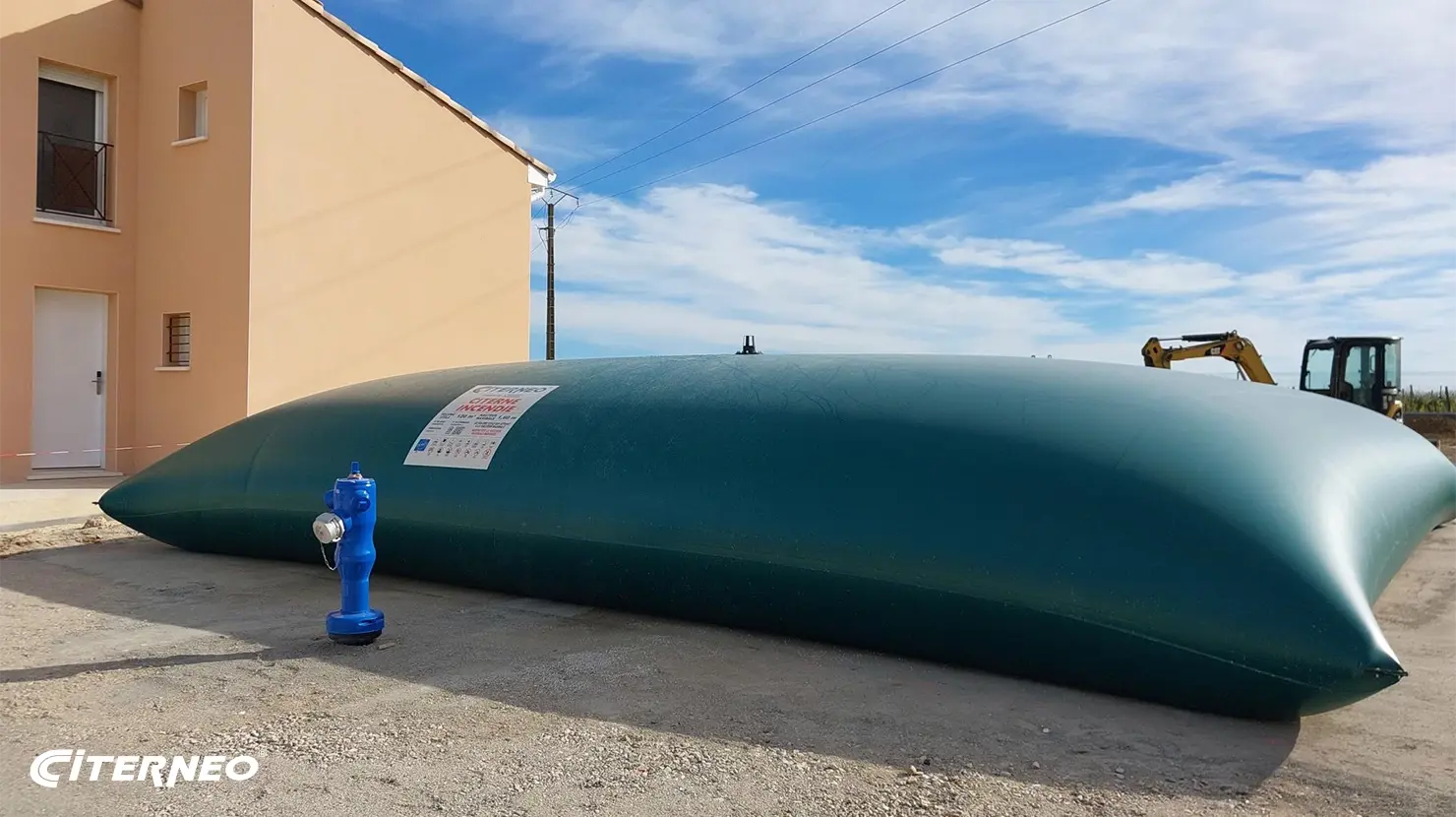
In order to prevent fires and protect their property, more and more private individuals are choosing to equip themselves with fire reserves.
The dry spell is a reality that everyone has to face every year. With rising temperatures and falling rainfall, the risk of fire is becoming a very serious threat, especially in rural and forested areas.
In this context, it is becoming urgent for private individuals to equip themselves with effective prevention devices such as flexible tanks, which stand out for their practicality, efficiency and durability.
Fire risks in times of drought
In 2022, France was particularly hard hit by forest fires, with over 72,000 hectares burned, more than 6 times the annual average of the previous 15 years.
These fires affected many regions, causing significant material losses and endangering human lives.
The upsurge in vegetation fires
Vegetation fires represent a growing danger, accentuated by climate disruption. In 2022, France recorded a significant increase in burnt areas, reaching more than 72,000 hectares, compared with an average of 9,300 hectares per year over the period 2006-2021, according to the European Forest Fire Information System (EFFIS).
Drought dries out soils and vegetation, creating ideal conditions for fire starts. Dry grasses, dead leaves and withered branches turn into perfect combustibles. A spark is then all it takes to start a fire that can become devastating.
The causes can be multiple: lightning, sparks from agricultural machinery, campfires or even cigarette butts, not to mention unfortunately arson.
Vigilance essential to prevent fires
Preventing fires requires constant vigilance. In 2022, fires in Gironde ravaged more than 20,800 hectares, exacerbated by extreme drought conditions and strong winds. These figures illustrate the crucial importance of prevention and risk management to protect ecosystems and local populations.
Tending your garden, cutting dry grass and removing dead leaves are simple but effective measures. However, these actions are not always enough. It's crucial to have a water supply ready for use at all times.
The importance of prevention to avoid devastating fires
Preventing fires isn't limited to maintaining green spaces. It also includes the installation of safety devices. Among these, water reserves play a vital role. They enable you to react quickly and effectively in the event of a fire. Having a fire reserve on your property can mean the difference between a fire that is quickly brought under control and one that is uncontrollable.
Flexible tanks represent a particularly interesting solution.
Easy to install and use, they offer a reliable water reserve that is immediately available.

Flexible tanks: a practical, efficient solution
Flexible tanks are reservoirs made from flexible materials such as PVC or coated polyester. They can be filled with water and stored easily. Unlike rigid tanks, they are lightweight and easy to install. They come in a range of capacities, from a few hundred liters to several tens of thousands of liters.
These tanks can be deployed in just a few minutes. Once in place, they withstand extreme weather conditions thanks to robust materials. Their flexibility means they can be adapted to various types of terrain.
This versatility makes them ideal for domestic use in fire prevention.
Advantages of flexible tanks
Flexible tanks offer several practical advantages. First of all, their installation does not require any heavy work. They can be laid directly on the ground, provided the surface is flat and clear. This makes them much easier to install.
Furthermore, these tanks are easy to move. This mobility is a major advantage for individuals who wish to change the location of their water supply as and when required. In times of drought, they can be repositioned in the most vulnerable areas of the property.
Furthermore, flexible cisterns prove highly durable. Made from UV-resistant materials, they withstand the harshest weather conditions. Their robustness guarantees a long service life and reliable use over the years. Finally, when not in use, these tanks can be emptied and folded away for easy, space-saving storage.
A fire reserve for immediate water availability
In the event of a fire, every minute counts. Having a water reserve available on the spot means you can act without delay. Flexible tanks can be connected to pumping systems or fitted with taps for fast, efficient use. Their presence on a property makes all the difference.
Risk reduction for property and people
Having this type of fire reserve protects homes and infrastructure from fire damage. It also reduces the risk to people by providing an effective defence against flames. In the event of a fire, having a water supply close at hand can save lives and minimize material losses.
Flexible tanks also contribute to collective firefighting. By facilitating the work of firefighters, they reduce the spread of flames. This is particularly crucial in rural and forested areas, where help can take a long time to arrive.
Choosing and installing your flexible tank in the best conditions
To choose a flexible tank, you first need to assess your water requirements. This depends on several factors, such as the size of the property, the risk of fire in the area and proximity to water sources. Consulting experts can help determine the optimum tank capacity.
It's advisable to choose a capacity slightly higher than estimated needs to cover any eventuality. This safety margin guarantees sufficient availability in the event of a crisis.
In times of drought, they also provide an additional source of water for watering gardens or cleaning. This versatility makes them an all the more attractive solution for private customers.
Citerneo, the right choice for fire prevention
The Citerneo "fire reserve" service focuses on the creation of freestanding reserves that can hold up to 2,500 m³ of water, specially designed for use in the event of a fire.
QB09 certification, quality for the building industry for fire reserves
This certification is issued by the Centre Scientifique et Technique du Bâtiment (CSTB).
A benchmark of quality for professionals and private individuals alike, it guarantees the use of high-performance, reliable and durable products.
This is the case for Citerneo fire reserves, which have obtained QB09 certification for all reserves. (QB quality for the building industry).
Their engineers in the R&D department have devoted their expertise to creating flexible tanks that require a specific high-resistance technical material, in order to satisfy a demand for high-capacity storage.
They therefore comply with fire protection standards, both for the tank itself and for its equipment.
Simple and quick installation of flexible tanks
All you have to do is prepare a flat, clear surface, unroll the tank and fill it with water. It's also important to regularly check their condition and carry out the necessary maintenance to ensure its durability.
Two people can install a 120 m³ flexible tank with a guillotine valve (above-ground device, located on the side) in half an hour, on a clean, horizontal surface.
Flexible tanks require little maintenance, but it's advisable to inspect them periodically for any damage.
Citerneo provides detailed instructions for the installation and maintenance of these tanks. Following these guidelines ensures optimal use and increased longevity.
Many private customers who have opted for flexible tanks testify to their satisfaction. They particularly appreciate the peace of mind that comes with having a water reserve in case of fire. Positive feedback also highlights the ease of use and robustness of these tanks.
Conclusion
Flexible tanks represent a practical, durable and economical solution for building up a fire reserve. By investing in these devices, individuals not only protect their property and loved ones, but also participate in collective firefighting.
For more information on flexible tanks and their installation, consult the experts at Citerneo, the French leader in this field since 2007.