
As a responsible player in the water storage market, Citerneo has a duty to ask the right questions, both in ethical and socio-economic terms about water management and preservation.
As a French manufacturer and market leader in flexible tanks for storing mainly drinking and non-drinking water, we are well aware of the issues surrounding recurring droughts and the growing need for water.
Today, we have to deal with crucial climatic issues while responding to tomorrow's problems.
One of the questions we are often asked is: Does water storage deplete water tables?
We'll answer this question in this article by explaining how our economical, ecological and Origine France Garantie storage solutions are totally compatible with preserved water resource management.
One observation : a worrying drop in rainfall and water table levels
Precipitation was irregular and insufficient over the latter part of 2022.
As a result, in March 2023, almost 75% of water tables showed moderately low to very low levels, heralding a summer drought to come.
A particularly worrying situation for around 50 départements, which could experience worse conditions than last summer.
"The situation gives cause for concern, as it affects virtually the whole of France and we're having one drought year after another," said Violaine Bault, hydrogeologist at the Bureau de Recherches Géologiques et Minières (BRGM), on April 13, 2023, when her monthly report was published (Source AFP).
At the end of February, the period during which water tables are supposed to recharge before vegetation resumes growth, the situation was already critical with around 80% of the country's water tables showing low or very low levels.
For BRGM , the risk of summer drought for certain regions is now "proven". We need to be prepared for this. Water tables are not sufficiently recharged, and the summer is going to be dry to very dry.
On March 30, Emmanuel Macron unveiled his "water plan" (see article link) consisting of 53 measures aimed at anticipating future periods of summer drought in France, to prepare the country for reduced availability of this now precious resource.
How then can we preserve water resources when the level of water stress is so high?
This is a central question for us, and our answer is self-evident: we reason as integrated water resource managers.
For yes, there are solutions for maintaining a balance between water needs and demands, particularly taking climate change into account.
According to the figures for February 2023, most rivers are showing an average flow of 40% below normal. On more than 200 measuring points, this average flow did not even reach 20%.
The current water situation therefore requires an evolution that has become crucial in order to adapt to this new reality.
Integrated water resource management is a global approach that aims to manage water sustainably by taking into account environmental, societal and economic aspects. One of the key objectives of this approach is to prevent groundwater depletion while ensuring efficient water use.
To store water adequately and avoid groundwater depletion, there are several integrated water resource management principles and techniques (not exhaustive):
rainwater harvesting
catchment management
reuse of treated wastewater
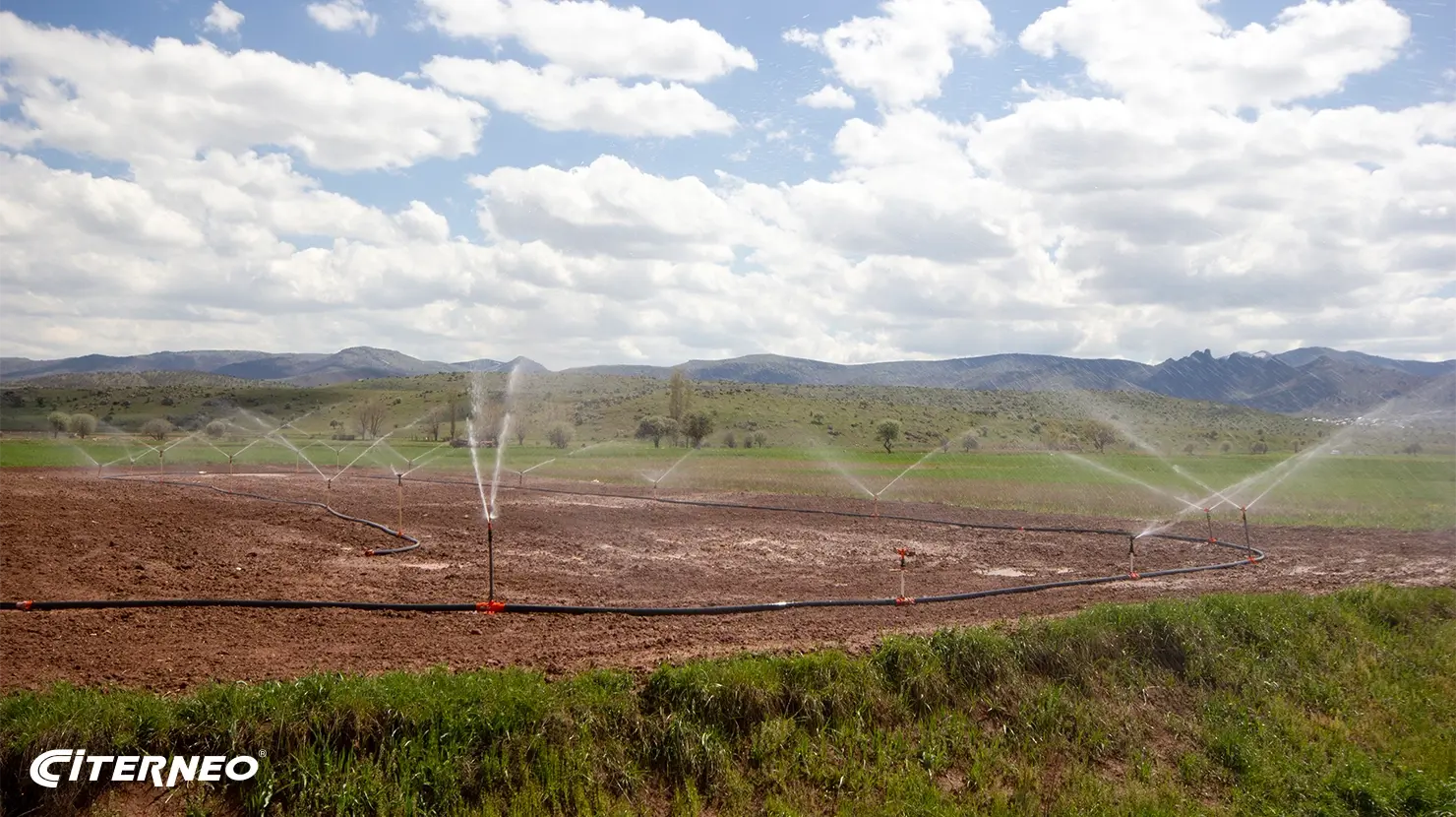
efficient irrigation
This awareness of the importance of sustainable water management
encourages responsible behavior, such as reducing water wastage, adopting sustainable practices and using water-friendly technologies.
It's important to note that water resource management is a complex process that requires coordination between different stakeholders, including governments, local authorities, water experts and industry players.
At Citerneo, we place particular importance on awareness-raising and education. We are committed to informing and raising the awareness of specifiers such as communities of communes, farmers or industrialists.
Our rainwater collection and storage solutions do not deplete water tables, as this management is developed based on field experience.
Citerneo advocates sustainable management of water resources
Our water storage solutions such as fire hydrants, rainwater harvesters and flexible tanks have been designed to store lost water.
What do we call lost water in an urban environment?
To answer this question, we need to distinguish between storage solutions in the city and in the agricultural world.
In the city, this is run-off water which, when it reaches roofs, roads and sidewalks, can be channeled into stormwater collection networks and then directed into retention basins, or watercourses.
The water can also be collected in rainwater harvesting tanks or collectors for later use, such as irrigation or other non-potable uses.
However, in highly urbanized areas, the majority of surfaces are impermeable, which prevents water from infiltrating into the ground. It then flows into sewage systems, which can lead to overflows and pollution of rivers and then oceans.
Some of this water can also penetrate the ground, whether in green spaces or unpaved areas. This infiltration contributes to groundwater recharge and flood prevention. So storing water won't deplete them.
What happens to water lost in rural areas?
The needs of the agricultural sector differ. Agriculture accounts for around 9% of water withdrawals, mainly for irrigation, and represents 48% of total consumption. This is a very water-intensive sector, as the water withdrawn is not returned directly. It returns to the water cycle as steam and is transformed into precipitation elsewhere.
The installation of flexible tanks and flexible water tanks does not contribute to groundwater depletion, as these rainwater tanks offer a constant storage volume, unlike open tanks such as irrigation ponds or, geomembrane ponds.
The closed structures prevent water evaporation, external pollution by leaves or insects and they confine odors.
The water resource is thus always preserved and in no way depletes the water tables.
At the end of the day, in the city as in the countryside, the objectives remain the same store water in rainy periods for use in tighter periods, summer, avoiding the use of groundwater.
Citerneo preserves water resources thanks to its storage solutions
We know, we have to face up to new climatic challenges.
And in this context, our approach is both different and structuring.
Citerneo preserves water resources
We don't deplete water resources, but we preserve them, by creating reusable retention systems. The flexible tank is, in this way, part of the water cycle.
Our collection systems are thus installed from drop points to conduct this water into all kinds of reservoirs.
In order to meet tomorrow's environmental challenges, Citerneo's teams are also committed to a long-term CSR (Corporate Social Responsibility) approach.
In fact, we design all our products with the aim of limiting our environmental impact.
Actions are deployed at the heart of our activities and processes, such as reducing our waste, reusing materials internally or deliberately choosing not to use water in our manufacturing processes.
We have also developed a responsible and sustainable composite fabric: EXOM+ 130e and EXOM+ 140e.
This fabric contains up to 30% less PVC. This innovation reduces transport-related CO2 emissions while offering improved mechanical characteristics.
Perfectly watertight flexible tanks
Also known as reservoirs, flexible tanks, pouches or reclaimers, flexible tanks can be used to store various quantities of rainwater or drinking water for later reuse.
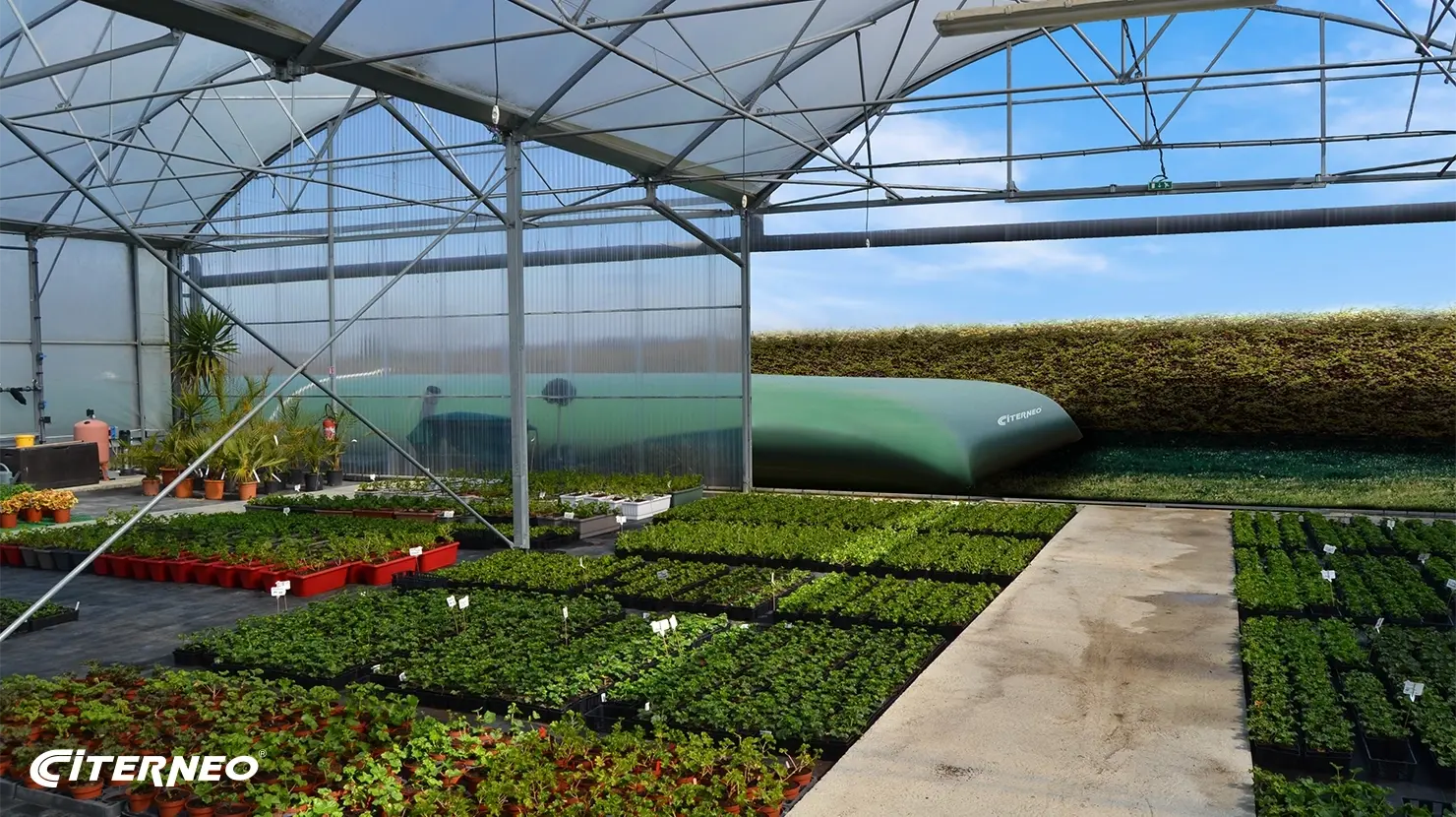
This storage unit is designed to enable the recovery of rainwater for use such as watering, cleaning or washing. It is equipped with a rainwater collector that collects water from the gutter and redirects it to the flexible tank.
Its capacity varies from a few m³ to several thousand liters, and it is absolutely watertight.
Citerneo's R&D team has also developed a specific fabric to protect the perimeter of the tanks. It's called the Weedbuster. This fabric is installed around the tank and prevents the development of vegetation.
It replaces the presence of pesticides and edge trimmers and ensures effortless maintenance all around the tank.
Conclusion
Storing water therefore does not deplete the water tables; on the contrary, it enables rainwater to be recovered for reuse during periods of drought. The aim is to contribute to crop irrigation, domestic uses of water (for watering gardens, for example) or industrial uses.
At Citerneo, we're fully aware of the climate emergency that needs to be addressed. That's why we're working hard to develop a whole range of storage solutions that are compatible with sustainable water resource management and respond to the new climate,