
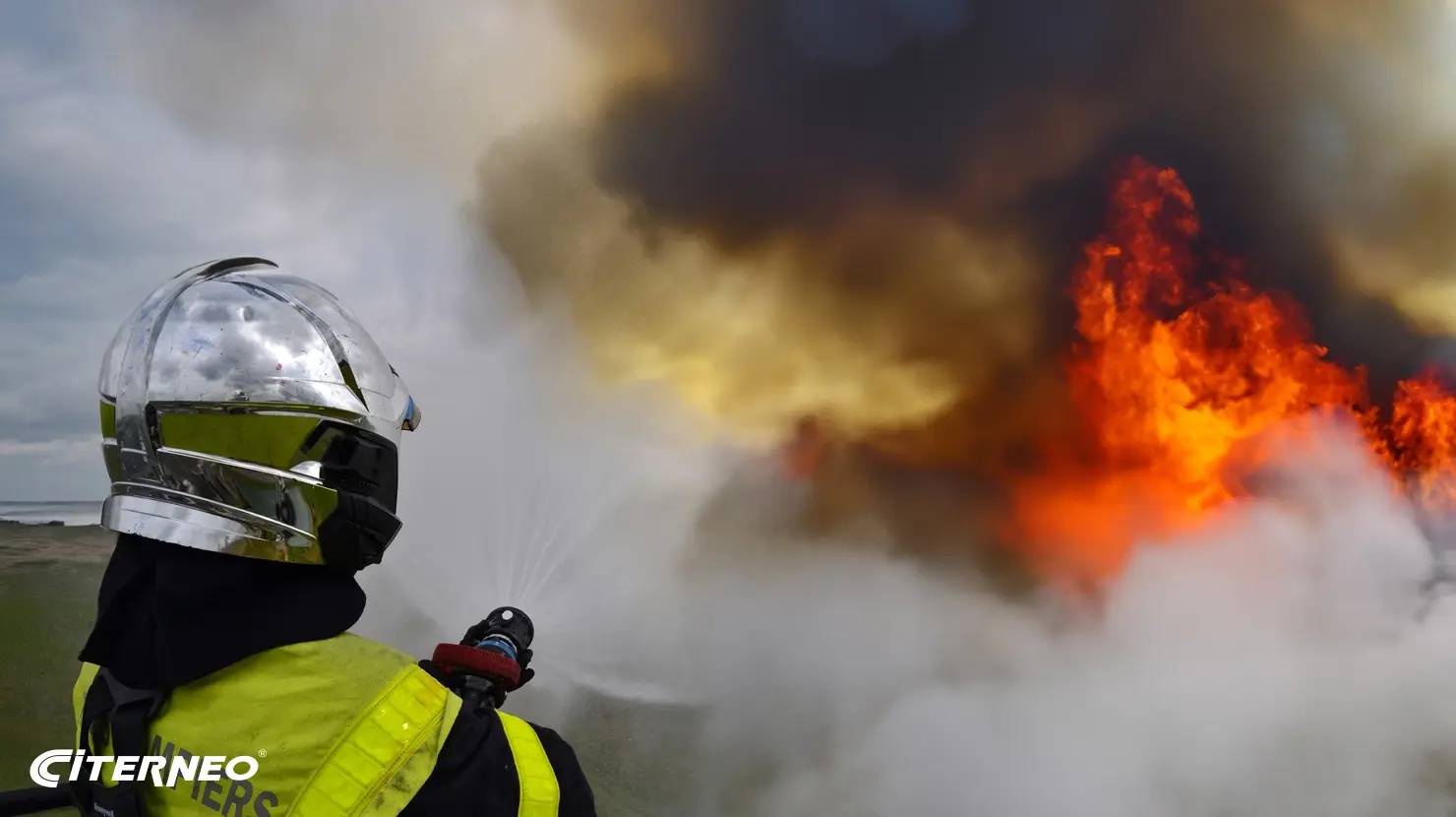
The devastation caused by fires in 2022 has highlighted the urgent need to address the growing threat posed by forest and vegetation fires.
Under the impact of climate change, the fire season is intensifying, extending the critical fire period which is gradually spreading to new geographical areas.
To effectively protect your property and your environment, clearing undergrowth from your land and its surroundings remains essential.
Clearing undergrowth to protect yourself from forest fires
Brush and wasteland play a crucial role in the spread of fires, especially in times of drought, by providing easy fuel that feeds the flames. Clearing undergrowth acts as a bulwark against fires, restricting their spread and making it easier for firefighters to intervene.
If you anticipate and clear undergrowth, your home's self-protection is assured, and in the event of a fire, you'll be able to remain confined to it without endangering yourself. Your living environment is thus preserved, because a cleared forest is more beautiful than a burnt forest.
Investing in the clearing of undergrowth on your property is therefore an essential precautionary measure, all the more so as it is a legal obligation in certain at-risk geographical areas.
What does the law say about clearing your land of undergrowth?
The obligation to clear undergrowth (OLD) and maintain it in a cleared state is stipulated in the Forestry Code, specifically in articles L131-1 to L136-1. Since 2012, this law has required all owners of structures or facilities located in forested areas or less than 200 meters from a wooded area (woods, moors, maquis, garrigues) to clear their land of undergrowth, as well as the access leading to these structures.
According to these regulations, it is required to clear undergrowth up to a distance of 50 meters around constructions and up to 10 meters along private access roads. Undergrowth clearance is defined as a set of "operations whose aim is to reduce the intensity and limit the spread of fires by reducing plant combustibles, by guaranteeing a break in the continuity of the plant cover and by pruning maintained subjects and eliminating felling slash". This includes the pruning of trees and the removal of felling residues.
What is "débroussaillage"?
You can call it "débroussaillage" or "débroussaillement". The French language allows both words. Once you've decided which word to use, it's time to take action. Clearing undergrowth involves reducing the amount of vegetation of all kinds (grass, branches, leaves, etc.) to reduce the intensity of fires and slow their spread. It can involve, for example, pruning trees, shrubs, hedges or removing the remains of cuttings (branches, grass...)
It is the prefect of each department who determines the conditions for implementing clearing according to the potential nature of the risks. In territories that are not considered to be high-risk fire zones, it is the mayors or presidents of inter-communal bodies who are responsible for identifying fire-risk zones not covered by a plan for the prevention of foreseeable natural risks. Also known as a PPRN or PPRNP, this is a prevention plan that regulates land use according to the foreseeable natural risks to which they are subject.
If you own land, what are your obligations?
Clearing undergrowth to protect your home in the countryside
If you own a house, building site and/or any facility in a rural area, you are required to clear undergrowth. You are obliged to clear your land of undergrowth and maintain it in a cleared state if it is less than 200 meters from a wood or forest.
This operation must be carried out around your home to a depth of 50 meters. Along access roads to your property (road, footpath, private path), brush clearance must be carried out around your home to a depth of 10 meters on either side of the road. A municipal or prefectoral decree may modify these rules. For more information, please contact your local town hall or prefecture.
Clear the perimeter of your property to protect your home in the city
In urban areas, you are also concerned by the obligation to clear your land of undergrowth, whether it is built or not. You are invited to consult the website of your town and/or the local authority to which your town belongs.
If you rent your house and/or land, you may be relieved of this obligation if you have taken care to indicate in your tenant's lease that this task is theirs by right.
When should you clear brush?
A seasonal clearing schedule
It's above all a question of common sense. Any gardener or nature lover will advise you to clear undergrowth in the winter period when trees lose their foliage and for some their fruit. You'll see more clearly when it's time to cut and prune, and you'll have less green waste to dispose of from your property.
If you decide to clear undergrowth in spring, be careful as you risk destroying birds' nests in the middle of their breeding season. And especially if you decide to tackle this garden work during the summer period, be very vigilant, especially if you use electrical appliances, likely to cause fire starts, which would still be very counterproductive.
What are your obligations if you sell or rent your house?
In the event of a sale or rental or lease renewal, you must inform the future owner or tenant of his or her obligation to weed the land or maintain it in a cleared state, and of the existence of any easements.
What are the risks involved if you fail to clear your land of undergrowth?
Progressive penalties according to official scales...
The mayor may decide to impose a fine of up to €100 per day of delay. The total amount demanded is a maximum of €5,000. You will have to pay this astreinte from the date of notification: Formality by which a procedural act or decision is brought to the attention of a person of the formal notice and until you clear the brush, or until the mayor (or the prefect) has it done ex officio at your expense. Payments are made quarterly in arrears. The mayor may grant you partial or total exemption from costs if you can justify that you were unable to meet all your obligations due to external circumstances.
The commune may also impose an administrative fine of up to €30 per m² not cleared of undergrowth. In addition, you risk a criminal fine of up to €1,500.
... which can go as far as criminal sanctions
If your failure to clear brush has allowed the spread of a fire that has destroyed someone else's property, you can be sentenced to up to 1 year's imprisonment and a €15,000 fine. If it's your home, your insurer may apply an additional deductible of up to €5,000.
At the end of the day, what are the right things to do to protect your environment if you live in a high-risk area?
Protecting the environment means acting to limit the impact of human activities on the planet and for the climate. When you live in a high-risk region, this awareness is acute and necessary.
Each fire causes material damage, of course, but above all human and psychological damage.
It's worth remembering the major fires that have made the news in recent years, such as the one in Gironde on July 12, 2022, during the hottest summer on record in Europe. Two historic fires broke out in Landiras and La Teste-de-Buch. More than 5,300 hectares of forest went up in smoke, in La Teste-de-Buch, on the Arcachon basin and Landiras that summer.
We can also recall the one in August 2021, which ravaged the Maures massif killing 2 people and destroying an area of 7,000 hectares.
Every gesture counts to protect yourself and others. Whether it's clearing undergrowth of course, but also the joint action of clearing undergrowth and installing a water tank. If necessary, this could save your house, as was the case for a resident of Cogolin in the Var department. These 2 flexible tanks of 30 and 40 m³ enabled him to water and save his house and land.
In particularly exposed Mediterranean areas, regulated brush clearance combined with the presence of water tanks contributes significantly to limiting the effects of fires, safeguarding forest areas and optimizing fire-fighting operations.
In order to reinforce the effectiveness of government measures and encourage every stakeholder must commit to this approach.