
Faced with a growing global water shortage, the issue of mobile storage now extends beyond drinking water alone: local authorities and industry must also contain stormwater, industrial and agricultural effluents, as well as hydrocarbons.
According to UNESCO, global demand for freshwater could increase by 20% to 30% by 2050, driven by urbanization and intensive agriculture. At the same time, the World Resources Institute already classifies 17 countries - home to a quarter of the world's population - as experiencing "extreme" water stress.
In this context, the challenge is no longer simply to produce water, but to rapidly store and transport all strategic liquids - from fire reserves to agricultural nutrient solutions - to where they are lacking.
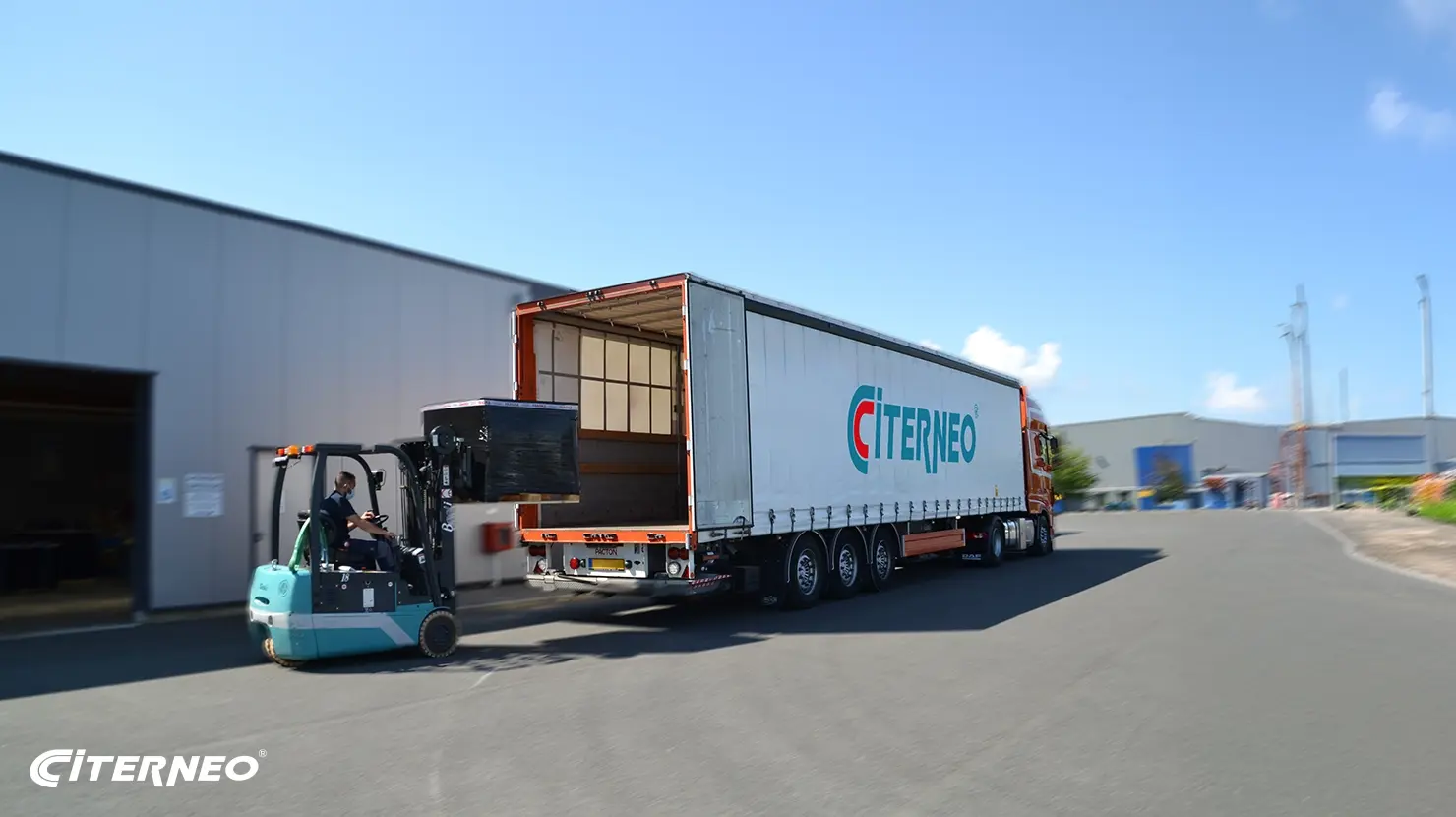
From the commune of Chargé, in Indre-et-Loire, Citerneo designs and manufactures flexible tanks capable of arriving folded on pallets, then supplying up to several thousand cubic meters of water.
The company claims a presence in more than 55 countries and positions itself as a key player in mobile storage.
A global need for water flexibility
Water stress linked to climate disruption
The World Bank estimates that, in the absence of adaptation, water shortages could cost up to 6% of GDP in some regions by 2050. Recurring droughts in the Horn of Africa, flash floods in subtropical Asia, devastating fires in temperate latitudes: climate variability calls for transportable buffer reserves that can be deployed in emergencies.
Water logistics: the question of the last mile
In humanitarian aid or the extractive industry, the challenge is not always to find water but to transport it. A 1,000 m³ flexible tank fits into a 20-foot container and weighs less than 2 tons, 7 times less than an equivalent metal tank.
A 120 m³ flexible tank weighs less than 300 kg and fits into a cubic meter: 10 units travel in a single container; the same rigid capacity would require 15.
On site, two to three operators, possibly a Desherbache (to reinforce the tank's durability) and a pump (to ensure rapid filling) are all that's needed for watering.
Prolonged droughts, cyclones or giant fires call for buffer reserves that are easy to move or implement. Rigid infrastructures - concrete or steel tanks - require months of construction and suffer in seismic zones. Flexible tanks, on the other hand, can be deployed without the need for cranes or foundations.
"Origine France" expertise that travels internationally
Recognized manufacturing quality
All CITERNEO flexible tanks, with the "Origine France Garantie" label, leave our Touraine factory, whose management system is ISO 9001 certified. They are made from high-performance polyester fabric covered with high-density PVC on both sides, guaranteeing perfect watertightness for the liquids stored.
CITERNEO is equipped with an in-house laboratory for testing the mechanical strength of fabric and welds. These tests are complemented by quality controls throughout the manufacturing chain. Traceability is ensured by a unique serial number assigned to each flexible tank and managed by a CRM.
The quality of welds and fabric is rigorously tested, both internally and externally, in accordance with current standards such as ISO 3801, ISO 2411, ISO 1421 and ISO 1875-3. A control file records the results and is validated before shipment to the customer.
Traceability and international compliance of Citerneo tarpaulins
Each tank is delivered with an electronic passport: a QR Code links to a personalized area with technical documentation, installation instructions, user guide, FAQ, etc.
In parallel, depending on the country, all useful documentation is transmitted to facilitate formalities. For example, at the port of Abidjan, since 2024 the Ivorian Office for Water Safety has required EN 1186 before customs clearance. Thanks to this digital file, Citerneo tanks clear customs in 48 hours instead of five days for a tank without traceability.
Panorama of export destinations for flexible tanks
Three examples of international deployments
Italy, Turin (2017): delivery of a 120 m³ flexible tank to store rainwater and drip-irrigate a market-garden farm. Result: -30% on the water bill in one season.
Guyana (2022): installation of a 60 m³ fire reserve in the Amazon rainforest. Set up in less than 48 h, compared with a week for a steel tank.
Czech Republic (2021): several 100 m³ flexible tanks to store cooling water for a plastics factory. Installation in 24 hours, tenfold reduction in footprint and less downtime.
Why the flexible tank accelerates export?
Compact transport generates quantified savings
A 1,000 m³ flexible tank folds into 6 m³ and weighs just 2 tonnes. Ten units - or 10,000 m³ - travel in a 20-foot container, compared with fifteen containers for steel tanks.
On a Europe-Asia route, this represents a 70% reduction in shipping costs and an average saving of 9 t of CO₂ per voyage. Port and handling charges follow the same trend.
A plug & play installation with controlled safety
For a 200 m³ tank, two technicians are all that's needed. The installation guide is illustrated on four pages and translated into several languages. Safety pictograms welded onto the tank convey essential instructions.
Result: 200 m³ operational in less than two hours, a valuable time-saving for NGOs and mining industries.
Extreme resistance and certified standards
The PVC liners used by Citerneo withstand -30°C to +70°C. Tested to ISO 3801, ISO 2411, ISO 1421 and ISO 1875-3, they guarantee robustness and longevity. For example, in the Andes at an altitude of 3,800 m, they are resistant to intense UV.
Citerneo's international development prospects
Cap towards Asia-Pacific markets
Philippines, Papua New Guinea, Indonesia: public tenders now require flexible water reserves for coastal villages exposed to typhoons. Resilience budgets are on the rise, opening up markets for ready-to-deploy solutions such as flexible water tanks.
Tank reconditioning and a circular economy
Fabric offcuts are recycled into gratings for agricultural, equestrian or event floors. This approach reduces the carbon footprint per cycle by 40% and meets the "circular economy" clauses increasingly present in public procurement contracts.
Conclusion
From a workshop in the Loire Valley to greenhouses in Piedmont, from Amazonian forests to Czech workshops, CITERNEO flexible tanks demonstrate that a simple solution can solve complex problems.
Logistical capacity, rapid deployment, climatic robustness: three assets that propel this French SME to more than 55 countries.
Leader in the flexible tank market, CITERNEO places innovation at the heart of its development. Its vision perfectly sums up the expectations of its stakeholders: "We've built our history, let's build our future together."